Under the Waves
When something new feels too big
The sea, a new food, a new playground: some children need more time. In this story your child meets the big sea one tiny step at a time, toes first, and is always allowed to step back. Nobody rushes them, and they get there in the end.
1 day: we create and check your book · 2–5 days: printing · 3–6 days: delivery




- Free shipping on 2+ books
- Printed in Europe
- Checked page by page before printing
- Secure payment
Helps with
Trying new things
Trying new things: going at your own pace when something feels big, cold or unfamiliar.
The tool your child practises in the story
Toes first
Split a new thing into tiny steps, from the smallest to the biggest, and say "toes first" before the first one. Your child decides when to take the next step, and stepping back is always allowed. It works for the sea, a bath, a new food or a new playground. Near water, always stay within arm's reach.
For grown-ups
What this story is about
The sea feels big and cold, and your child is not sure about it, even though there are stripy fish out there to see. A friendly turtle shares a small secret, "toes first", and your child tries the water in tiny steps, steps back when it is too much, goes back in to rescue a floating bucket and, in the end, chooses to look under the waves. The fear does not vanish: the child is brave with it, and passes the secret on.
Three ways to talk about it
- Name the feeling without hurrying it: "The water felt cold and big. It makes sense you wanted to step back."
- Let your child set the pace. Stepping back is part of the plan, not a failure.
- Notice each small step out loud: "You put your toes in. Then your ankles. You did that."
Three questions to ask
- How did the water feel the first time it touched your toes?
- What did you do when the bucket floated away?
- Is there something new you would like to try with "toes first"?
Practise the tool together: Toes first
Split a new thing into tiny steps, from the smallest to the biggest, and say "toes first" before the first one. Your child decides when to take the next step, and stepping back is always allowed. It works for the sea, a bath, a new food or a new playground. Near water, always stay within arm's reach.
If your child's fear of water or of new things is very strong, lasts for weeks, or gets in the way of play and daily life, it is worth talking to your paediatrician or a child psychologist.

Made with care
Every book is checked page by page before it's printed.
- Every book is checked page by page before it's printed.
- Printed in Europe on thick silk paper.
- A hardcover built to last, for years of bedtime stories.
Look inside
Twelve illustrated spreads: the picture on the left, the story on the right. These sample pages show an invented child called Amara.
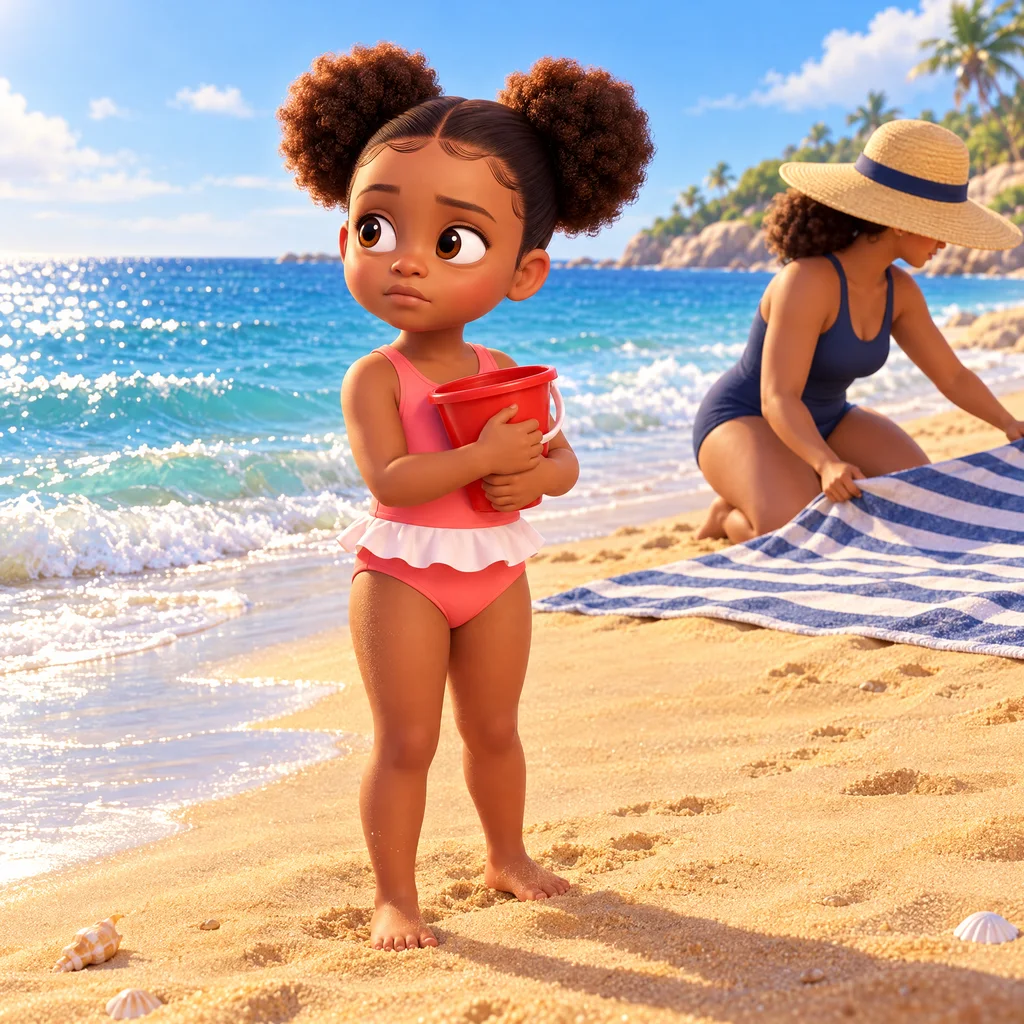
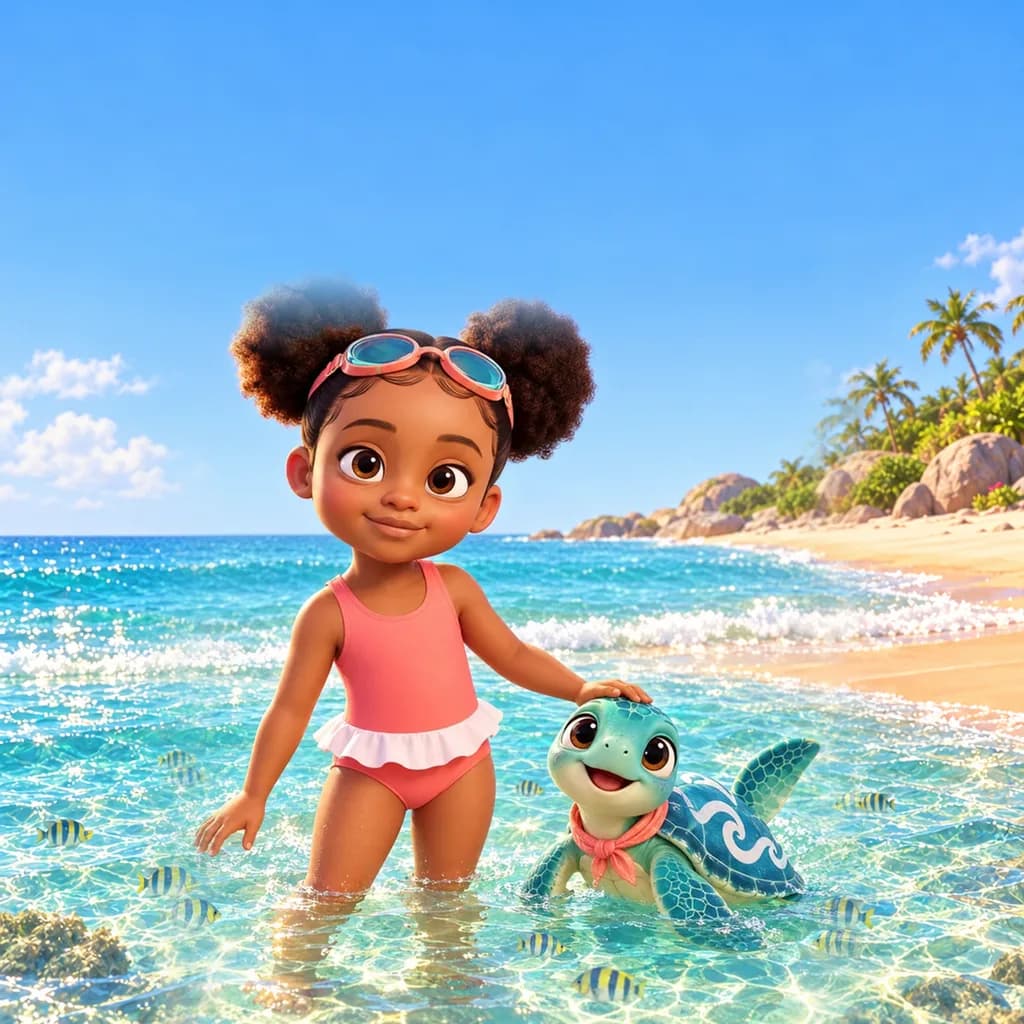
Amara stood on the warm sand, holding the little red bucket very tight. Inside it: a pair of blue goggles, just in case. Out in the shallows, something flashed. Yellow. Stripy. Gone! "A fish! I want to see it close." But the sea was so big. It went whoosh, whoosh, all the way to the sky.
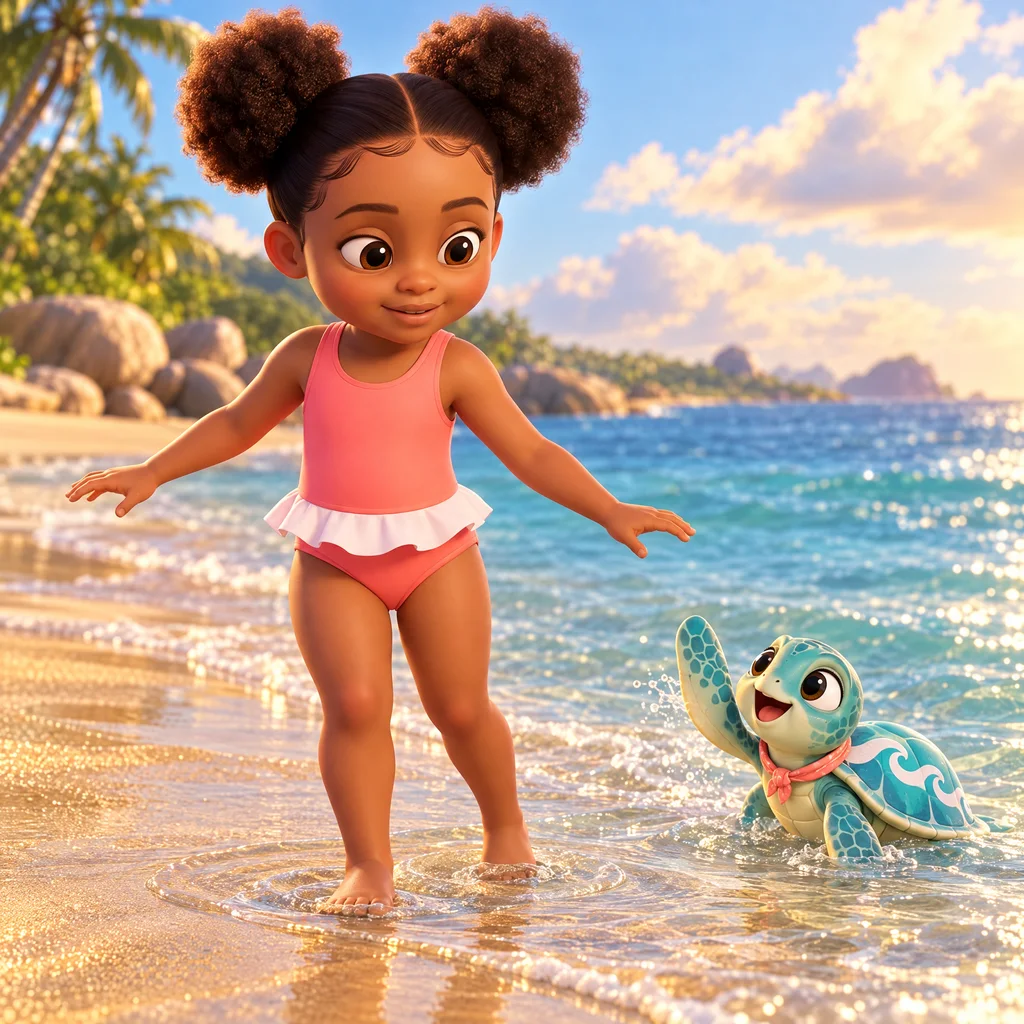
"Toes first," said Amara, and dipped them in. Cold! Back they came. Little Turtle just waited, blowing little bubbles. Breathe in. Breathe out. "Toes first." This time, the toes stayed. Wiggle, wiggle. The cold turned cool, then almost nice. "I did toes!" Then something tickled.
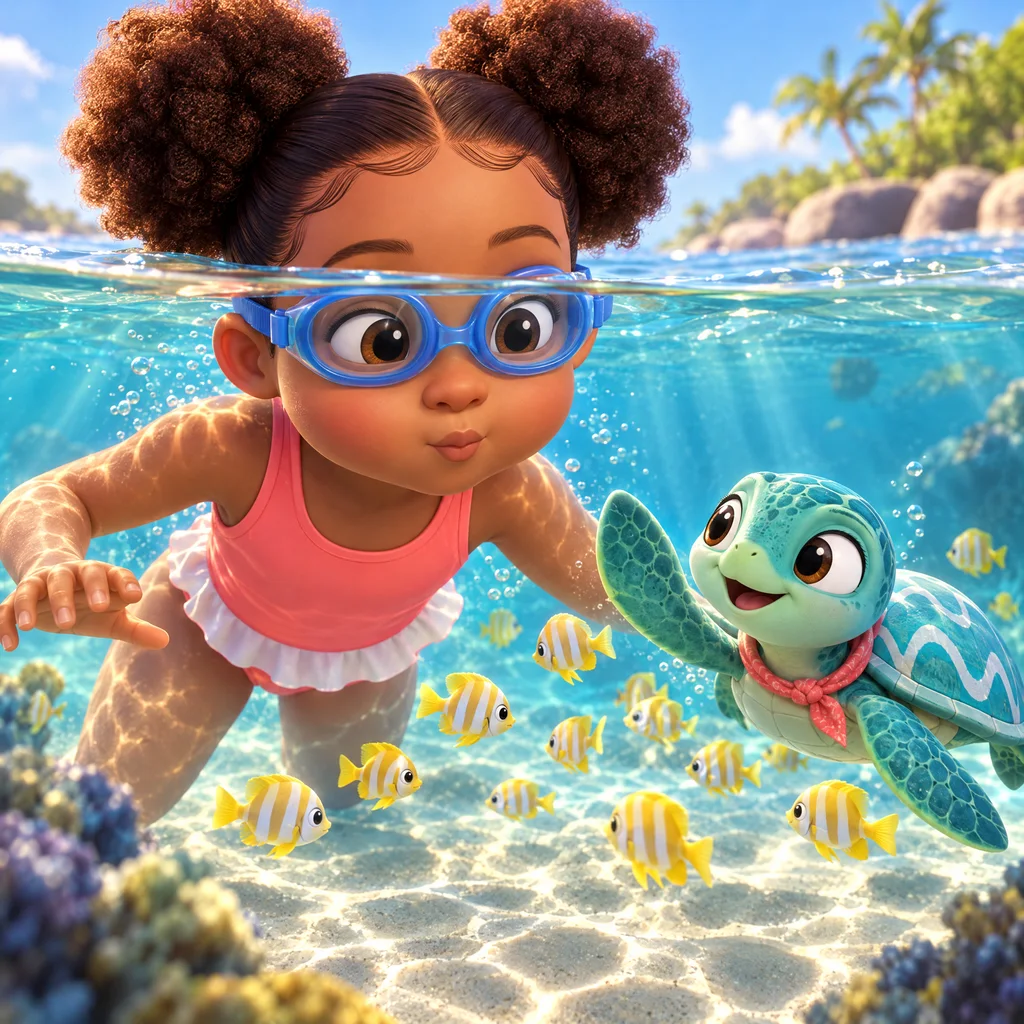
And there it was: a whole sparkly world! Stripy fish darted by, zip, zip, zip. Sunlight wiggled on the sand. Little Turtle swam past, upside down, showing off. Then one little fish swam right up to the goggles and looked in. Nose to nose! Up popped Amara, splashing and spluttering and laughing. "I saw them! One looked at ME!"
Spread 1 of 3